Announcement
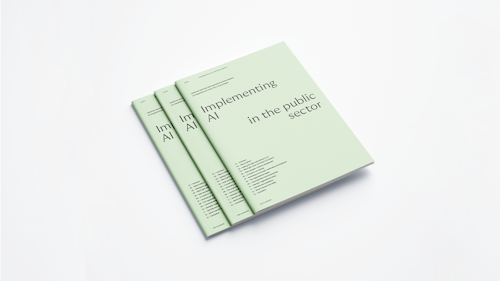
Report: Implementing AI in the public sector
Published On
2026-05-08
Public sector is facing a long-term structural challenge. Fewer people of working age will need to support a growing population requiring healthcare, social care, and education. This is a development that cannot be addressed through traditional efficiency measures alone.
AI frees up time for human expertise
At the same time, AI is creating new opportunities to transform how public organizations operate and deliver services. For the first time, technology can relieve large parts of information- and administration-intensive work – not to replace people, but to free up time for tasks that require human expertise, judgment, and presence.
We are now launching the report “Implementing AI in the Public Sector” – based on experiences from more than 50 AI implementations across Swedish public sector organizations.
Structure matters more than expertise
The report shows that successful AI transformation is rarely about the technology itself. The organizations achieving the best results are not necessarily those making the most advanced investments, but those working systematically, creating the right conditions, and focusing on tangible operational value.
Organizational barriers are often greater than technical ones
The biggest obstacles are often organizational. The value of AI is unclear to employees, tools are introduced without sufficient time or support for adoption, uncertainty slows progress, and AI is treated as an isolated IT initiative rather than organizational development.
The report summarizes key lessons, common pitfalls, and practical recommendations for how public sector organizations can create the conditions for sustainable and long-term AI adoption.
Get the report
Fill out the form below to be among the first to access the report.